
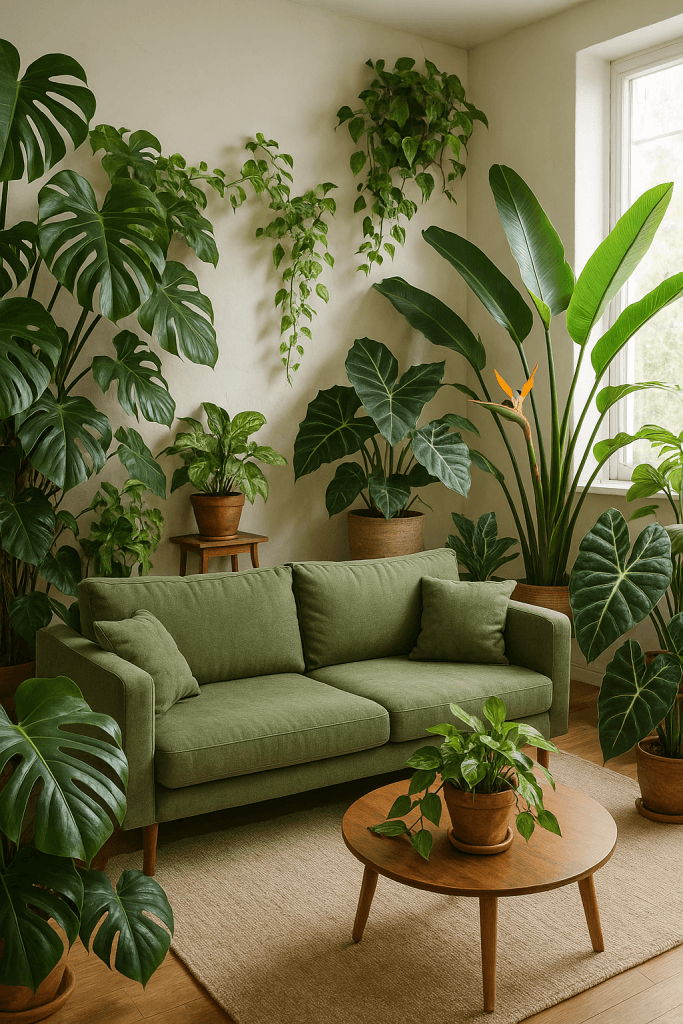
9 Exotic Indoor Plants That Will Transform Your Home (and How to Care for Them)
Exotic indoor plants: a unique touch for your home 🌿
- 1. Monstera Monkey (Monstera adansonii)
- 2. Bird of Paradise (Strelitzia)
- 3. Alocasia (Elephant Ear)
- 4. Tillandsia (aerial bromeliad)
- 5. Dieffenbachia
- 6. Potus or Pothos (Epipremnum aureum)
- 7. Syngonium (Syngonium podophyllum)
- 8. Philodendron (Philodendron spp.)
- 9. Monstera Deliciosa
- General tips for caring for exotic plants
1. Monstera Monkey (Monstera adansonii)
Known for its perforated leaves, it's perfect as a hanging plant or for training on a trellis. It requires bright, indirect light, moderate watering, and a humid environment. It adds a modern, jungle-like touch.
2. Bird of Paradise (Strelitzia)
A large plant with banana-like leaves and spectacular flowers when conditions are right. It needs plenty of light (but not direct sunlight), regular watering, and a bit of space. It adds verticality and elegance.
3. Alocasia (Elephant Ear)
One of the current favorites for its large leaves and unique shapes. There are many varieties such as Alocasia Polly , Zebrina , Amazonica , Regal Shield , and Dragon Scale , each with its own decorative style. It prefers indirect light, a warm and humid environment, and moderate watering. It's demanding but very decorative. It's susceptible to mites and fungi, so you can prevent problems with gentle treatments like Mobet or Botryprot .
4. Tillandsia (aerial bromeliad)
These plants don't need soil: they live off the air, absorbing ambient humidity through their leaves. Simply mist them a couple of times a week and ensure they have good ventilation. They're ideal for creative decoration in wooden containers, shells, or glass.
5. Dieffenbachia
Ideal for creating a tropical feel. Its large, variegated leaves give it a striking appearance. It doesn't need much light and thrives in moist, nutrient-rich soil. It's important to keep it away from children and pets, as its sap can be toxic if ingested.
6. Potus or Pothos (Epipremnum aureum)
One of the hardiest and most air-purifying plants. Perfect for low-light spaces and very easy to care for. It can be hung or trained to climb. It requires moderate watering and is very rewarding. It may be susceptible to pests such as mealybugs or aphids, which are easily controlled with Dactyprot or Bio Neem .
7 . Syngonium (Syngonium podophyllum)
With arrow-shaped leaves and a variety of colors, this climbing or trailing plant is very decorative. It grows quickly, adapts well to partial shade, and can be propagated from cuttings. It thrives in humid environments.
8. Philodendron (Philodendron spp.)
There are many varieties, from classic climbers to compact types like Philodendron Birkin. All are easy to care for and very hardy. They need indirect light, humidity, and loose potting mix. They are propagated by cuttings and are ideal for creating a tropical atmosphere.
9. Monstera Deliciosa
The “queen of Instagram.” Its large, green, and deeply divided leaves lend a spectacular tropical style. It needs bright, indirect light, moderate watering, and some humidity. As it grows, it appreciates a support for climbing. It is susceptible to fungal growth in the substrate if there is excess water, so it is advisable to use an aerated substrate and, if necessary, treat it with Mildiuprot+ .
General tips for caring for exotic plants
- Proper lighting: most of these tropical species thrive in indirect light, near well-lit windows but protected from direct sunlight.
- Balanced watering: ideally, keep the substrate moist, but not waterlogged. Excess water can cause fungal diseases. In case of root fungus or leaf spots, an organic treatment such as Botryprot or Mildiuprot+ from PROT-ECO can be an effective and natural solution.
- Ambient humidity: Many exotic plants thrive in high humidity. You can use humidifiers, trays of water, or mist the leaves. To prevent this humidity from encouraging pests like spider mites or mealybugs, you can apply preventative treatments with products such as Mobet or Bio Neem .
- Constant temperatures: avoid stressing them with sudden temperature changes or drafts. Keeping them in a warm and protected environment promotes their growth.
- Soil and transplanting: Use a loose, well-draining mix rich in organic matter. Transplant them every 1 or 2 years, especially if you notice the roots starting to grow out of the soil.
- Easy reproduction: many of these plants are easily propagated by cuttings, division of offsets or even in water.
- Natural pest prevention: Aphids, whiteflies, and thrips are common in indoor environments. To combat them without harming your home, you can use organic products such as Dactyprot , Esencialprot , or Cinnaprot Plus , all formulated by PROT-ECO.
- Precautions: Some species can be toxic if ingested, so keep them out of reach of small children or pets.