
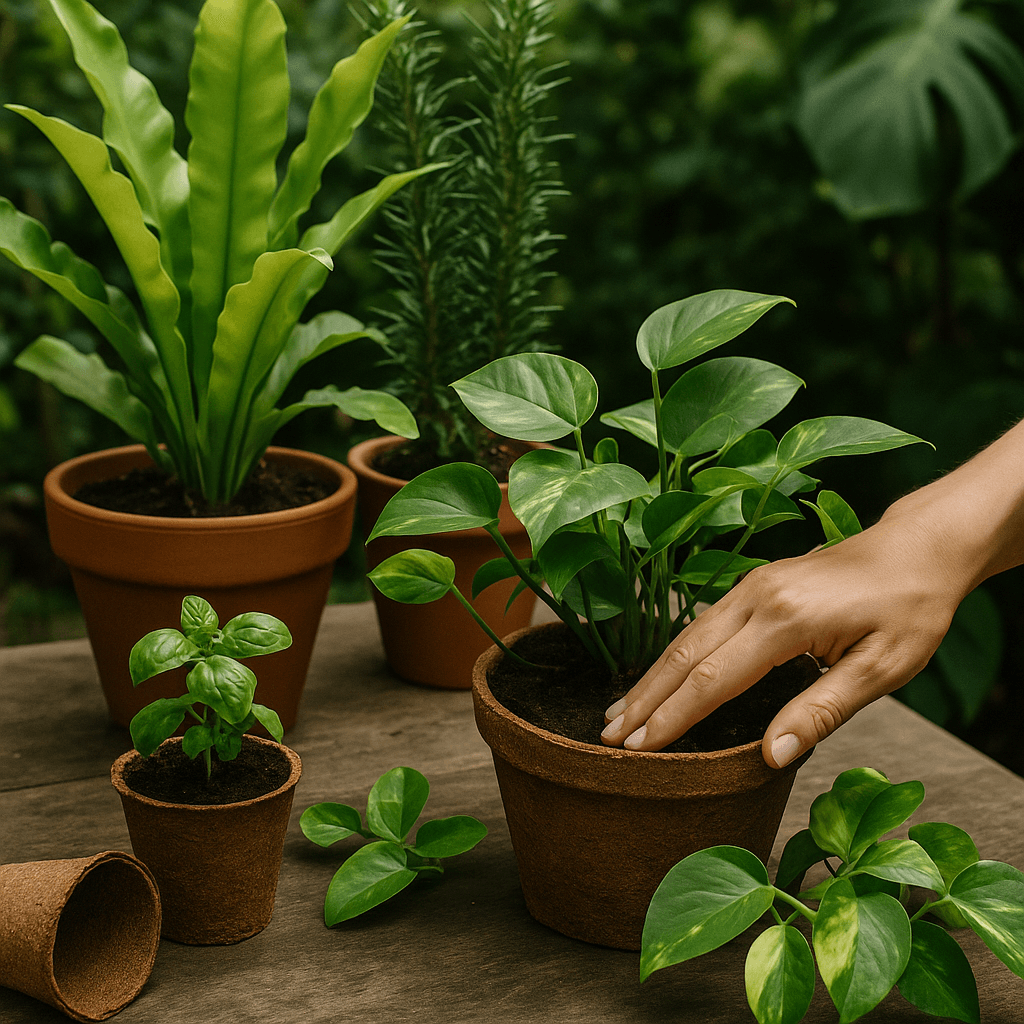
🌿 10 common mistakes that kill your plants (and how to avoid them)
Article index
- Introduction
- 1. Overwatering or underwatering
- 2. Not knowing the specific needs of each plant
- 3. Using the wrong substrate
- 4. Incorrect light exposure
- 5. Not acting in time against pests
- 6. Using harsh chemicals
- 7. Failure to transplant in time
- 8. Do not clean the leaves
- 9. Constantly changing location
- 10. Not treating diseases in time
- Conclusion
🌿 10 common mistakes that kill your plants (and how to avoid them)
Are your plants looking sad, stopping their growth, or dying for no apparent reason? It's not always the weather's fault. Sometimes we make mistakes without realizing it that directly affect our plants' health. Here we explain the 10 most common gardening and cultivation mistakes, and how to fix them with eco-friendly practices and natural products.
1. Overwatering or underwatering
One of the most common mistakes is watering without knowing if the plant actually needs it. Too much water can rot the roots, and too little can dry them out.
How to avoid it: Check the moisture of the substrate with your finger before watering and make sure the pot has good drainage.
2. Not knowing the specific needs of each plant
Each species has its own specific needs for watering, light, temperature, and nutrients. Treating them all the same can kill them.
How to avoid it: Learn about the needs of each plant, especially if they are indoor, tropical or delicate.
3. Using the wrong substrate
The substrate affects root development and the overall health of the plant. Inappropriate soil can suffocate the roots or deprive the plant of nutrients.
How to avoid it: Use specific and organic substrates for each type of plant or crop. Add perlite or coconut fiber if necessary.
4. Incorrect light exposure
Plants that receive little light weaken, and those that receive too much can burn.
How to prevent it: Place your plants according to their light needs: direct sun, partial shade, or full shade. Observe if they stretch in search of light or if their color changes.
5. Not acting in time against pests
Pests such as aphids, whiteflies, or thrips can quickly invade your plants if you don't detect them in time.
How to prevent it: Check the leaves frequently, especially the underside. At the first sign of symptoms, treat with organic products such as:
- Mobet: a natural leaf cleaner and preventative that improves plant resistance.
- Bio Neem: an ecological insecticide with a shock action, effective against pests without leaving residues.
The combination of both offers complete and environmentally friendly protection for your plants.
6. Using harsh chemicals
Many chemicals damage the plant's ecosystem and pollute the environment.
How to avoid it: Opt for ecological, zero-waste treatments, such as those from PROT-ECO, which take care of your plant safely.
7. Failure to transplant in time
The roots grow, and if they don't have enough space, the plant weakens or stops growing.
How to prevent it: Repot when you see roots growing out of the drainage holes or if the plant is very cramped. Use a slightly larger pot and refresh the potting mix.
8. Do not clean the leaves
Dust and dirt prevent the plant from properly performing photosynthesis.
How to avoid it: Clean the leaves with a damp cloth or with Mobet diluted in water, which also helps to prevent pests.
9. Constantly changing location
Moving the plant frequently causes stress and affects its development.
How to avoid it: Find an ideal location with the right light, humidity and temperature, and keep the plant there.
10. Not treating diseases in time
Diseases such as powdery mildew, mildew or botrytis spread quickly if they are not controlled from the beginning.
How to prevent it: Inspect leaves and stems for spots, white mold, or rot. Use specific organic treatments such as:
- Oidioprot for powdery mildew.
- Botryprot for botrytis and grey rot.
- Mildiuprot+ for mildew.
🌱 Conclusion
Avoiding these mistakes is key to enjoying healthy, strong, and long-lasting plants. Observe, learn, and act with eco-friendly solutions. At PROT-ECO, we offer natural, biodegradable, and effective products so you can care for your plants without harming the environment.